
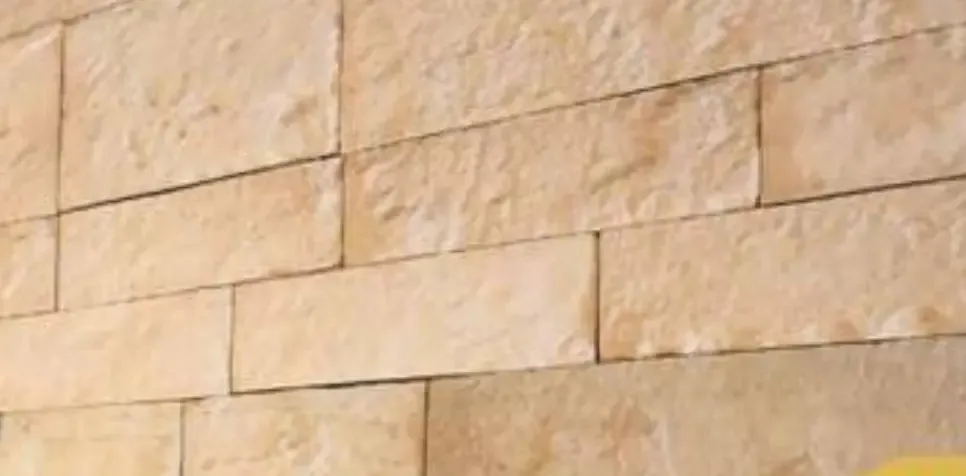
Beach Stone
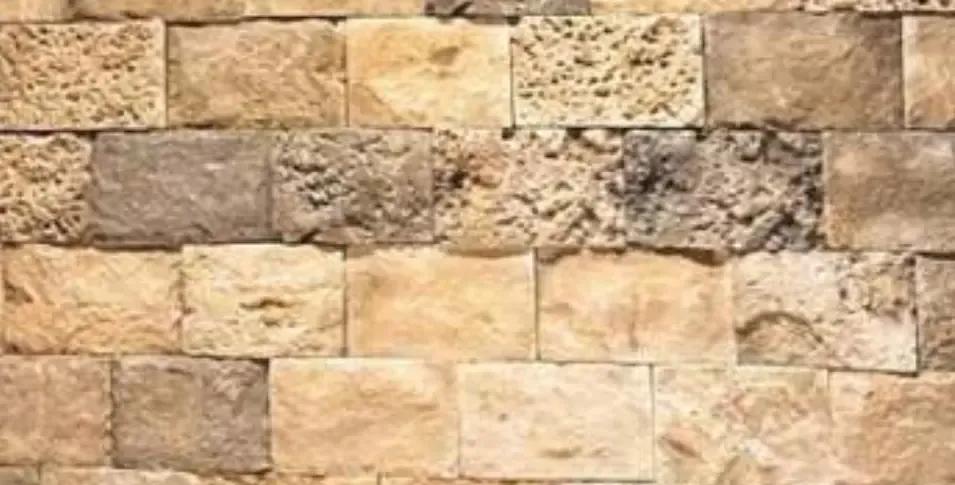
Pale shell-toned face — the closest match to Florida keystone.
- Face sizes
-
- 23 5⁄8" × 11 13⁄16"
- 15 3⁄4" × 11 13⁄16"
- 11 13⁄16" × 11 13⁄16"
Stone Appearance
Pale, shell-flecked faces specified for waterfront exposure — where salt drives the whole decision.
Within a mile of the water, salt decides everything. Miami Stone Veneer Specialists groups these four faces together because they're what we actually specify for waterfront elevations in Miami Beach, Key Biscayne, and along the Fort Lauderdale intracoastal.
It isn't dramatic. Nobody's wall falls off. What happens is slower and more annoying: airborne salt lands on the face, works into any open pore, and crystallises. Over years that crystallisation flakes the surface — efflorescence if it's coming from behind, spalling if it's coming from in front.
It also leaves a permanent pale haze. On Beach Stone or Oyster Stone you'll never notice, because they're already pale and flecked. On a charcoal slate or a dark rustic face, that haze shows up within weeks of a wash and looks like the wall is dirty when it isn't.
So the coastal specification is partly about durability and mostly about picking a colour that ages gracefully in an environment that will haze it.
Beach Stone is the flagship — pale, shell-toned, three formats up to 23⅝ inches. It's the closest thing we press to real Florida keystone. Oyster Stone is the small square version with a fine shell fleck. Stone Chips is a narrow chip format that reads as fine mosaic at distance and works beautifully on a feature panel.
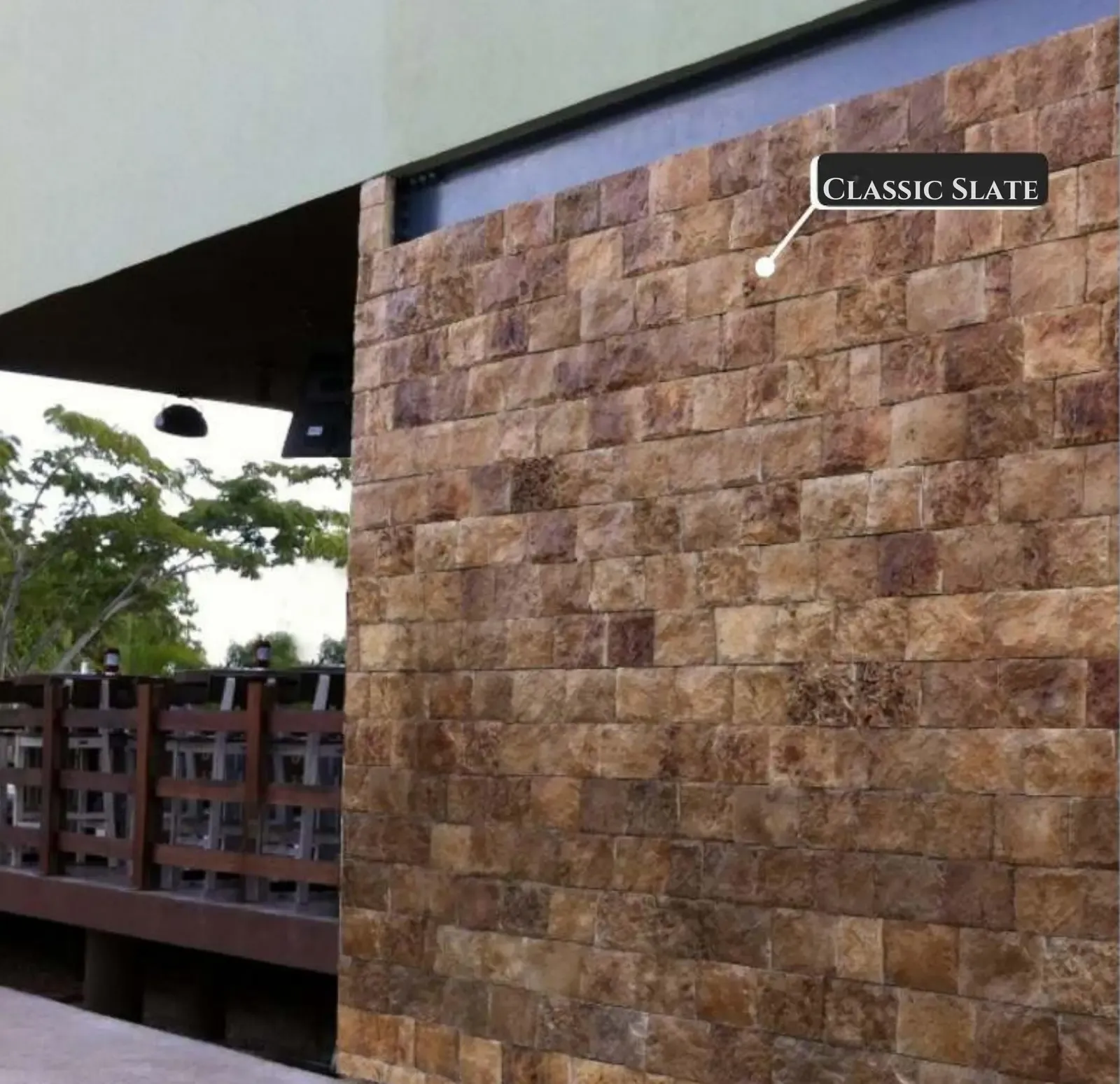
Classic Slate is the outlier: cool grey-blue, riven texture, two formats. It's here because it belongs tonally, not because it's the best oceanfront choice. Use it a few blocks back from the water.
$11 to $18 per square foot. Budget properly for sealer — on a waterfront job it isn't optional, and the reseal cycle is shorter than inland. That's a real lifetime cost worth knowing before you commit.
Four faces. The three pale ones are the waterfront specification; Classic Slate is here for its texture.
Pale shell-toned face — the closest match to Florida keystone.
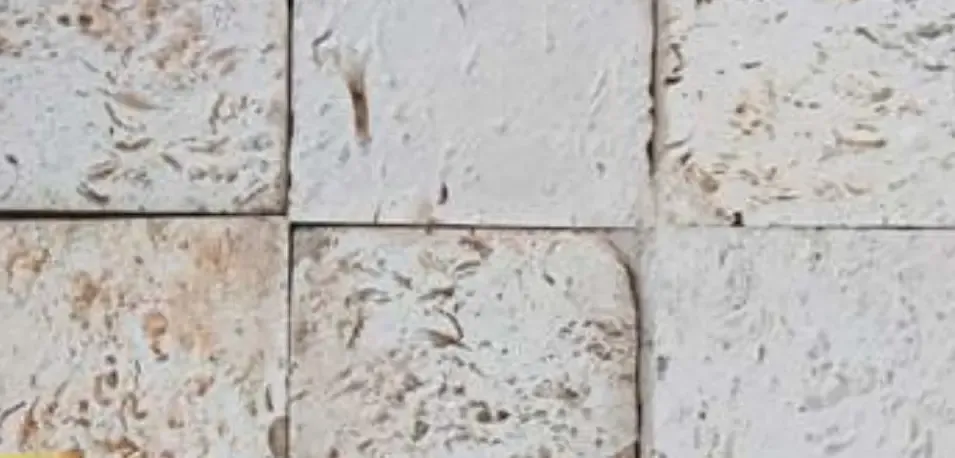
Small square with a fine shell-fleck texture.
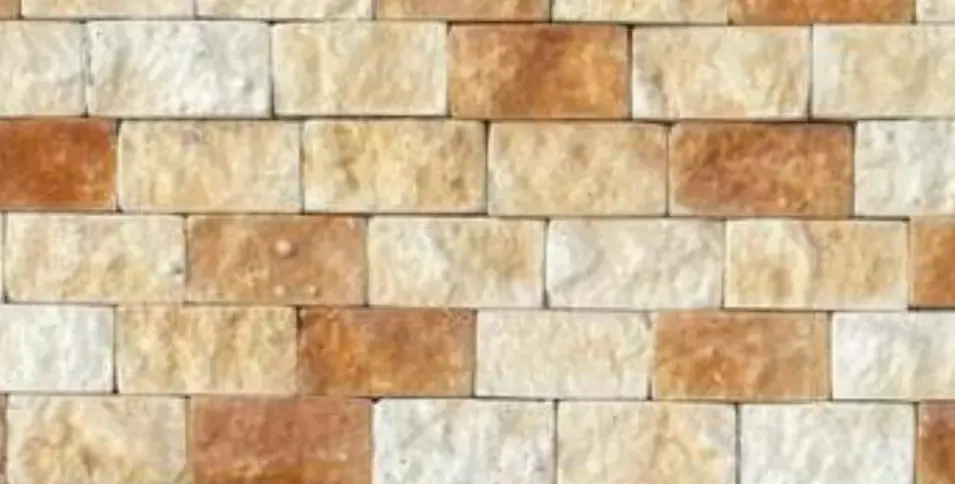
Narrow chip format that reads as a fine mosaic from a distance.
Riven slate face in two formats, cool grey-blue tones.
| Compressive strength | 200–250 kg/cm² |
|---|---|
| Body | Grey and white cement, standard and premium grades |
| Colour | Stock colourways plus custom colour matching |
| Finish | Through-coloured, sealed on request |
| Suitable substrates | CMU, poured concrete, brick, stucco, and framed walls over lath |
| Fire | Non-combustible concrete body |
| Exposure | Interior and exterior, above and below grade |
| Coastal use | Rated for salt-air exposure with a penetrating sealer |
| Salt exposure | Rated for direct coastal exposure with a penetrating sealer |
| Reseal interval | 4–5 years within a mile of open water |
Full spec sheets and dimensioned drawings are available for submittals — ask and they'll be emailed the same day.
The applications this range is specified for most often in South Florida.
The biggest surface on the job and the one that has to survive Miami weather. Here's what we stock for exterior elevations and how it's specified.
View details →Pool environments destroy the wrong material in a season. These are the faces that hold up to continuous chlorine and salt exposure.
View details →The entry is the smallest area with the biggest return. A few hundred square feet of the right stone changes the whole elevation.
View details →When the wall is the point. Deep-relief panels, lattice screens, and large-format stone specified for maximum effect.
View details →The Mediterranean look South Florida keeps coming back to. Long, low courses in warm limestone tones, with a radiused piece for columns and curved walls.
View details →Random flagstone without the layout headache — Chapa ships as a modular 7-piece sheet that repeats cleanly. Thin brick and four-size Roman opus sit alongside it.
View details →It's the closest concrete match we stock — same pale, shell-flecked read at normal viewing distance. It isn't keystone. Keystone is fossilised coral quarried in the Keys, and if a historic district or an architect's spec calls for it by name, you need the real thing. We source that too.
Two reasons. The pale colours don't show salt bloom the way dark stone does — every stone near the ocean gets a faint white haze, and on charcoal slate it's obvious within weeks. And the tighter, less porous faces give salt less to sit in.
Every four to five years within a mile of open water, versus seven or eight inland. Salt is relentless. Skipping it doesn't destroy the stone, but the face dulls and starts holding dirt.
It does, a bit. Classic Slate is in this range for its riven texture and cool tone rather than its salt performance. On an oceanfront elevation we'd steer you to Beach Stone or Oyster Stone. A block or two inland, slate is fine and looks superb.
Send your square footage and we'll come back with a number, a stock position, and a delivery date for Miami.