
Resources
Stone Veneer for Coastal & Waterfront Homes
Within a mile of the water, salt drives the whole specification — material, mortar, sealer, and maintenance interval.
By Miami Stone Veneer Specialists · Updated July 6, 2026
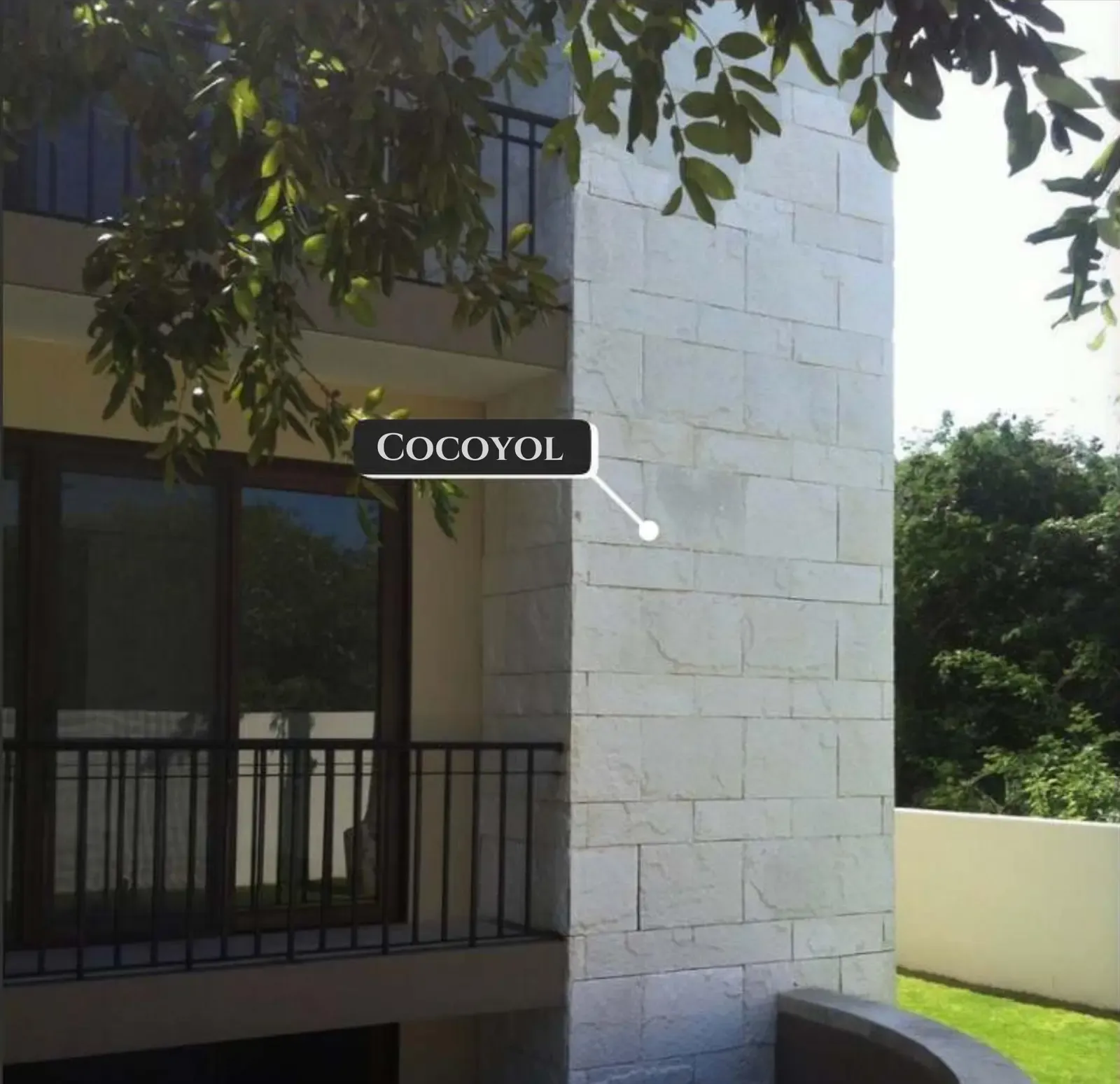
Miami Stone Veneer Specialists supplies a lot of material onto Key Biscayne, Miami Beach, and the Fort Lauderdale waterfront. Salt changes everything about how a wall is specified, and most of it isn't about durability.
What salt actually does
Concrete handles salt well. Marine structures are made of it. The stone itself isn't at risk in any meaningful way.
What salt does is three smaller things that add up:
- Mineral bloom. Spray lands, water evaporates, salt stays. A fine white deposit builds on the surface.
- Sealer breakdown. Constant salt cycling degrades sealers faster than UV alone.
- Joint attack. Mortar joints are softer than the stone and take the wear first. Repointing is the realistic long-term maintenance item on a coastal wall.
Why pale stone wins
Salt bloom is white. That single fact drives the entire colour decision.
On a dark stacked stone, white deposit is visible within weeks and obvious within a season. The homeowner then attacks it — pressure washer, acid wash, scrubbing — and in eighteen months the wall looks worse than the salt ever made it.
On a pale, shell-flecked face the bloom is essentially invisible. Nothing has changed about the chemistry; you've simply stopped fighting a battle you couldn't win. Our Coastal Stone range exists for this.
The coastal specification
- Pale, through-coloured face. Non-negotiable within a mile of open water.
- Type S mortar, colour-matched, properly tooled. Joints are the wear point.
- Breathable penetrating sealer at install, then every five to six years.
- Stainless or hot-dip galvanised lath and fasteners. Standard galvanised corrodes in coastal air, and it fails invisibly behind the stone.
- Generous weeps at the base so salt-laden water drains rather than sitting.
- Rinse twice a year with fresh water. Sounds trivial; it's the highest-value maintenance there is.
Point four is the one that gets skipped and it's the most expensive to fix. A corroded lath means the veneer eventually loses its mechanical fixing, and by the time you can see the problem the wall is coming off.
How far inland does it matter?
- Direct waterfront to ¼ mile — full coastal spec, no shortcuts. Re-seal every five years.
- ¼ to 1 mile — full spec still worth it. Salt reaches further than people expect, especially on the ocean side.
- 1 to 3 miles — stainless fixings are cheap insurance; colour choice opens up. Re-seal every six or seven years.
- Beyond 3 miles — standard Florida specification is fine.
If you're unsure which zone you're in, tell us the address and we'll tell you straight — including when you don't need the more expensive specification.